Courtroom etiquette: what to do from the moment you arrive
Arrive early, silence your phone, stand when asked, know who sits where and how speaking order works. Simple manners that help your day go smoothly.
By the FastFile teamUpdated Nov 13, 2026 5 min read
General information, not legal advice. Rules differ by court and change over time. For your own case, ask your law firm. Law firms can contact us about FastFile.
Why manners matter in court
Courtroom customs can feel strange, but they have simple purposes: keep order, give everyone a fair turn and show respect for the process. You are not expected to know every custom. Following the basics, and doing what the clerk or bailiff asks, is enough.
Arrive early
Plan to get to the courthouse well before your hearing. Parking, security lines and finding the right room all take time. Arriving late can lead to your case being called without you, and a ruling against you.
Step 1: Go through security
Step 2: Find your courtroom
Look at the posted list or ask at the information desk. Courtrooms are often numbered by floor.
Step 3: Check in
Some courts have you tell the clerk or bailiff you are there. Others do not. If unsure, ask quietly.
Step 4: Wait quietly
Sit in the gallery until your case is called. Do not talk about your case in the hallway where the other side can hear.
Phones and behavior in the room
- Turn your phone off or fully silent before you enter. Vibrate can still be heard.
- Do not take photos, video or audio unless the judge allows it. Many courts forbid it.
- Do not eat or chew gum. Water may be fine in some rooms.
- Do not talk while court is in session. Whisper only if you must, and rarely.
- Take off hats and sunglasses, unless worn for religious or medical reasons.
- Keep reactions in check. No sighing, head shaking or laughing, even when you disagree.
- Keep children with you only if allowed. Many courtrooms do not permit young children.
When to stand
In many courtrooms, a court officer says something like "All rise" when the judge enters or leaves. Stand until the judge sits or you are told you may sit. You may also be asked to stand when you speak, or to speak from a podium or the table. Follow what you see or ask what the judge prefers.
If you have a health condition that makes standing hard, tell the clerk ahead of time. Courts can make adjustments.
Who sits where
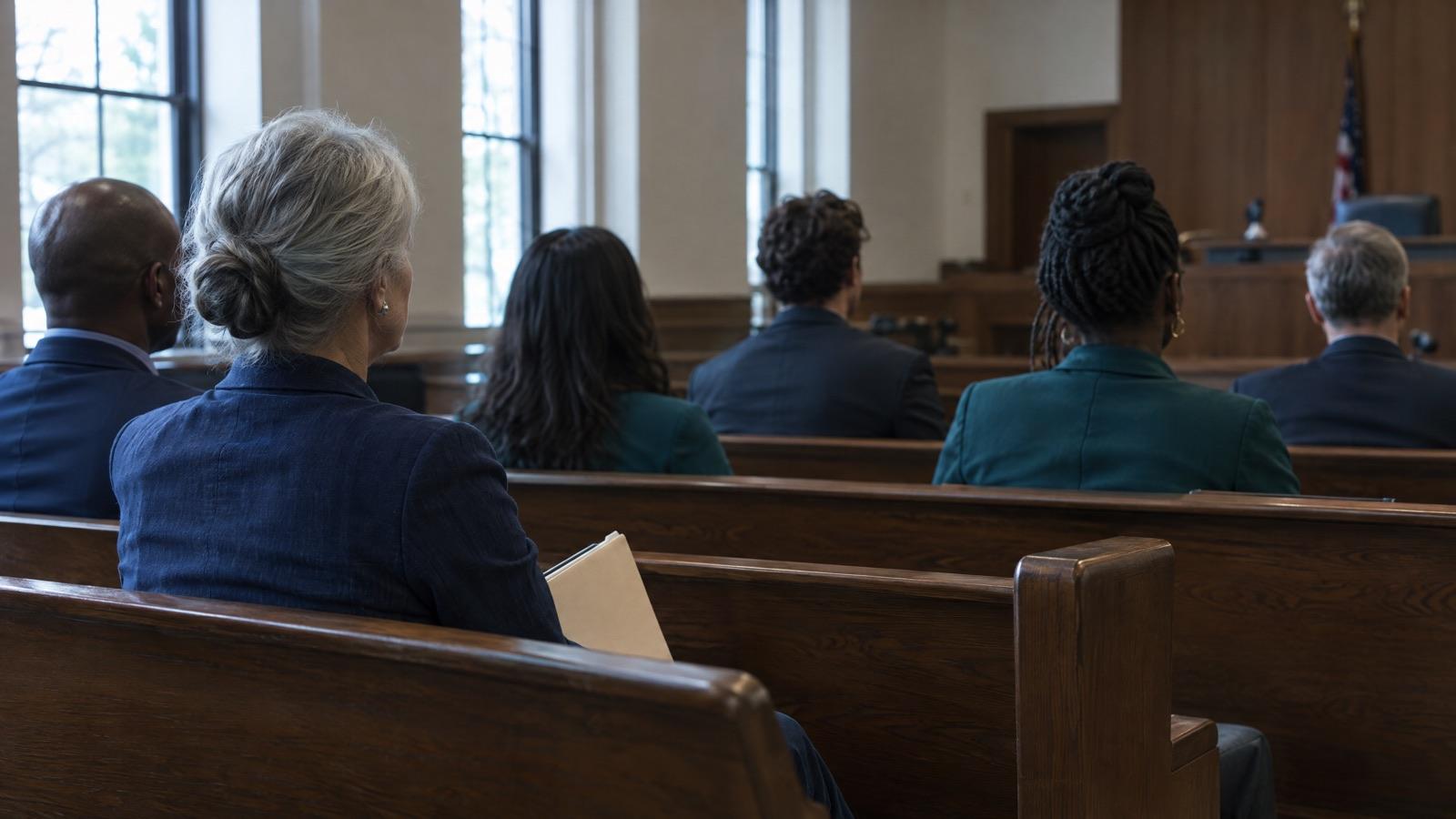
Layouts differ, but most courtrooms share the same pattern. A railing, called the bar, separates the gallery from the working area.
- Judge
- Sits at the raised desk, called the bench, at the front.
- Clerk
- Usually sits near the bench. Handles papers and exhibits, and calls the case in some courts.
- Court reporter or recorder
- Keeps the official record, by typing or by audio. Speak clearly so they can hear you.
- Bailiff or court officer
- Keeps order and security. Follow their directions.
- Parties' tables
- One for each side, in front of the bench. Often the person who started the case sits at one table and the other side at the other.
- Witness stand
- Where witnesses sit to testify. Some courts have you speak from a podium instead.
- Jury box
- Seats for jurors, if there is a jury. It is empty in many hearings.
- Gallery
- Seats for the public, witnesses waiting and support people.
If you are not sure where to sit, ask the clerk or bailiff before the judge comes in. It is better than guessing.
Speaking order
Speaking order depends on the type of hearing, but there is usually a pattern: the person asking for something goes first, the other side responds, and the first person may get a short reply. At a trial, the order is more formal. See the civil trial step by step.
- Step 1: The judge calls the case and may ask each side to state their name.
- Step 2: The person who asked for the hearing usually speaks first.
- Step 3: The other side responds.
- Step 4: The judge asks questions along the way, and you stop to answer.
- Step 5: The judge decides, or says when a decision will come.
Speak to the judge, address the judge as "Your Honor," and wait to be invited. More on this in how to talk to a judge.
Quick check
Courtroom manners checklist
0 of 7 doneYour ticks stay on this device only.
Quick check
Your phone buzzes in your pocket during the hearing. What was the better choice?
Questions
What happens if I am late to court?
Your case may be called without you, and the judge may rule against you or dismiss it. If you are running late, call the clerk's office right away and arrive as soon as you can.
Can I bring a friend or family member?
Most hearings are open to the public, so yes, but some courts limit who may attend, and witnesses may be asked to wait outside. Children are often not allowed. Ask the clerk if unsure.
Do I have to stand every time I speak?
It depends on the court. Some ask you to speak from a podium or table. Follow the judge's lead or ask the clerk before the judge comes in.
Can I record the hearing on my phone?
Usually no. Most courts forbid recording and photography. Ask the clerk how to get a copy of the official record.
Where do I sit if I do not have a lawyer?
You sit at one of the parties' tables, or where the clerk tells you. Ask the clerk or bailiff before the judge comes in if you are not sure.
General information, not legal advice. Rules differ by court and change over time. For your own case, ask your law firm.
Read next
 Hearings and trials
How to talk to a judge when you have no lawyer
Say "Your Honor," wait your turn, keep answers short and calm. What to say, what to avoid, and what to do if you do not understand.
5 min readRead Hearings and trials
What to wear to court, and what not to bring
Clean, neat, comfortable clothes are all you need. Here is what works, how security screening goes, and what to leave at home.
5 min readRead Hearings and trials
How to prepare for a court hearing: a week-by-week plan
A calm plan for the weeks and days before your hearing: what to read, what to bring, what to say, and how to get there on time.
6 min readRead