How to serve court papers in Kansas
Can you serve the papers yourself?
Someone who is not part of the case has to serve the papers. You can't hand them over yourself.
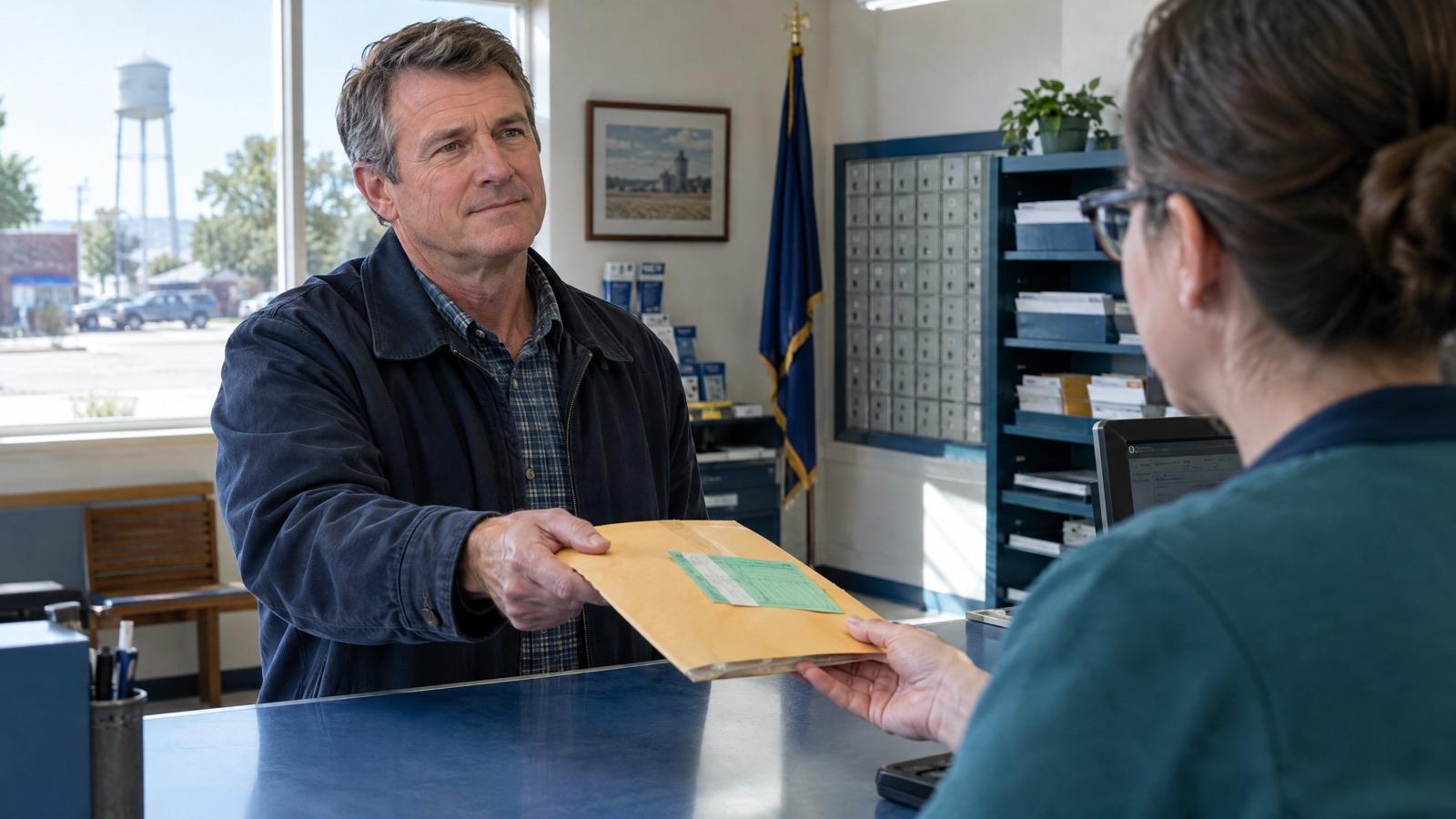
Who can serve the papers
- Sheriff of the county where the case is filed
- Sheriff's deputy
- A Kansas-licensed attorney
- A licensed private detective
- A process server appointed by a judge or the clerk of the district court
Personal and residence service must be made by one of the people listed. There is no private process server license in the statute; instead a judge or clerk appoints servers, and appointments should be made freely. A plaintiff may tell the clerk they will handle service themselves, which lets them send papers by return receipt delivery but not hand them to the defendant.
Check with the clerk whether your county has its own rules for process servers.
Ways to serve
Hand delivery
AllowedDeliver, or offer to deliver, the summons and petition to the person. If they refuse to take it, the offer and the refusal are enough (K.S.A. 60-303(d)).
Leaving papers at the home
AllowedLeave the papers at the person's home with someone of suitable age and discretion who lives there. If neither works, leave a copy at the home and mail a notice by first class mail.
Certified or registered mail
AllowedCalled return receipt delivery: certified mail, priority mail or a courier, with a written or electronic receipt showing who got it and when. The sheriff, the party or the party's attorney sends it in a sealed envelope (K.S.A. 60-303(c)).
Mail with an acknowledgment form
Not allowedFirst class mail is not a main method for a summons. It can be used only after a certified envelope was refused, or in garnishments (K.S.A. 60-303(c)(5), (f)).
Waiver or acceptance of service
AllowedA signed acknowledgment of service on the summons counts as service, and so does voluntarily appearing in the case (K.S.A. 60-303(e)).
Newspaper notice (publication)
AllowedAllowed under K.S.A. 60-307 and proved by an affidavit or declaration with the dates and newspaper.
Email or other electronic service
Not allowedEmail and fax service is listed only for serving a garnishee, not a defendant being sued (K.S.A. 60-303(f)).
The deadline to serve
- Days to serve
- 90 days
A case counts as started on the filing date only if service is made within 90 days after filing; the court can add 30 days for good cause. The server must file a return within 14 days after service.
Proof of service
After the papers are served, the server signs a proof of service and it is filed with the clerk. In Kansas it is the Return of service: an officer's statement under penalty of perjury, or an affidavit or declaration from any other server; return receipt delivery uses a return with the receipt attached..
Serving a company, and small claims
- A company
- Serve an officer, manager, partner or resident, managing or general agent; or leave the papers at a business office with the person in charge; or serve an authorized agent. The Secretary of State can be served if there is no resident agent (K.S.A. 60-304(e), (f)).
- Small claims
- Small claims follow the limited actions service rules. The sheriff serves unless the party tells the clerk they will, and return receipt delivery (certified mail or courier) is allowed (K.S.A. 61-3003). The rule
Serving checklist
0 of 6 doneYour ticks stay on this device only.
Where this comes from
Kansas's own rules and court pages, read in November 2026. Rules change: check them before you serve.
- K.S.A. 60-203(a), 60-301, 60-303, 60-304, 60-308, 60-312
- K.S.A. 60-212 Defenses and objections (Kansas Revisor of Statutes)
- K.S.A. 60-206 Time, computation (Kansas Revisor of Statutes)
- K.S.A. 60-203 Commencement of action (Kansas Revisor of Statutes)
- K.S.A. 60-304 Service of process, on whom made (Kansas Revisor of Statutes)
- K.S.A. 60-308 Service outside state (Kansas Revisor of Statutes)
- K.S.A. 60-312 Proof of service (Kansas Revisor of Statutes)
- K.S.A. 61-2705 Small claims pleadings (Kansas Revisor of Statutes)
- K.S.A. 61-3003 Methods of service, limited actions (Kansas Revisor of Statutes)
General information, not legal advice. Rules differ by court and change over time. For your own case, ask your law firm.
Questions
Short answers about serving papers in Kansas, from the state's own rules.
Who can serve court papers in Kansas?
Sheriff of the county where the case is filed. Sheriff's deputy. A Kansas-licensed attorney. A licensed private detective. A process server appointed by a judge or the clerk of the district court.
Can I serve the papers myself in Kansas?
No. Someone who is not a party to the case has to serve them.
How long do I have to serve the papers in Kansas?
A case counts as started on the filing date only if service is made within 90 days after filing; the court can add 30 days for good cause. The server must file a return within 14 days after service.
How do I serve a company in Kansas?
Serve an officer, manager, partner or resident, managing or general agent; or leave the papers at a business office with the person in charge; or serve an authorized agent. The Secretary of State can be served if there is no resident agent (K.S.A. 60-304(e), (f)).
Suing in Kansas?
Get the code from your law firm and sign up. You decide what to file, and nothing goes to the court without your OK.
FastFile is not a law firm and does not give legal advice. FastFile is a self-help platform for people who represent themselves in court. Using FastFile does not create an attorney-client relationship.